Introduction
When we think about education, many of us immediately associate it with classrooms, exams, certificates, and degrees. While these are important milestones, true education goes far beyond academic achievements.
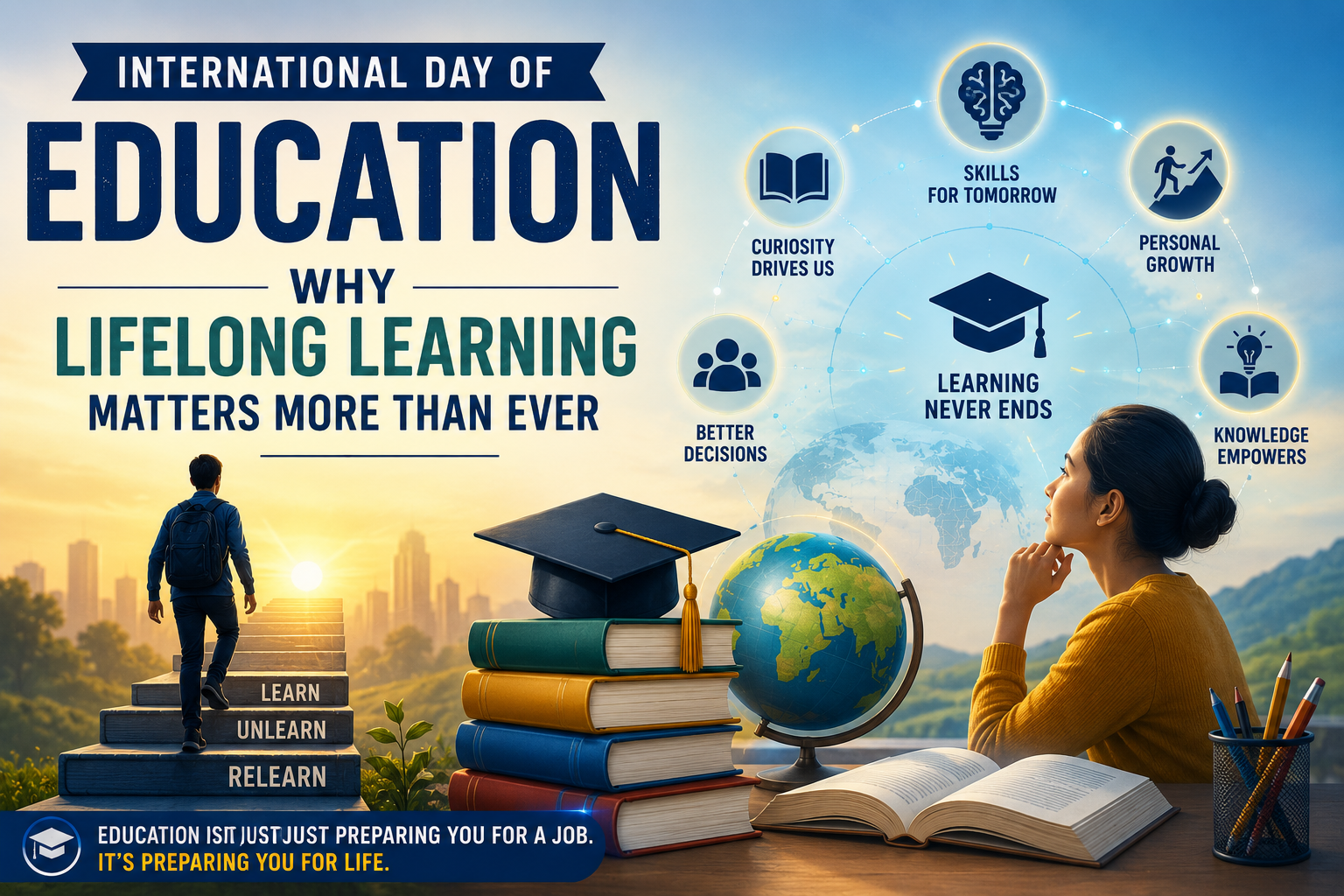
On International Day of Education, it’s worth reflecting on a powerful truth: some of life’s most valuable lessons are not taught in a classroom. Education is not simply about collecting qualifications; it is about developing the ability to think critically, make informed decisions, adapt to change, and continue growing throughout life.
As the world evolves faster than ever before, the importance of lifelong learning has become increasingly evident. In today’s rapidly changing environment, learning is no longer limited to a specific stage of life—it’s a continuous journey.
Education Beyond Marks, Degrees, and Certificates
Traditional education systems often place significant emphasis on grades, academic performance, and certifications. While these achievements can open doors to opportunities, they do not fully define an individual’s ability to succeed in life.
True education helps people:
- Think independently
- Solve real-world problems
- Make better decisions
- Adapt to challenges
- Build confidence and resilience
- Develop emotional intelligence
The most valuable lessons often come from experiences, curiosity, failures, and the willingness to keep learning beyond formal education.
Why Lifelong Learning Has Become Essential
The world today is very different from what it was a decade ago.
Technology, industries, and job roles are evolving at an unprecedented pace. Skills that were highly relevant yesterday may need updating tomorrow. This is one of the reasons why UNESCO continues to emphasize lifelong learning as a necessity rather than an option.
Lifelong Learning Helps Individuals:
- Stay relevant in changing industries
- Develop new skills and competencies
- Improve career opportunities
- Enhance personal growth
- Adapt to technological advancements
- Build confidence in uncertain situations
Learning should not stop after graduation. In fact, continuous learning is often what determines long-term success in both professional and personal life.
The Real Purpose of Education
One of the most powerful perspectives on education comes from Albert Einstein, who famously stated:
“Education is not the learning of facts, but the training of the mind to think.”
This quote remains highly relevant today.
Information is available everywhere. What truly matters is the ability to:
- Analyze information critically
- Think independently
- Evaluate different perspectives
- Make informed decisions
- Apply knowledge effectively
Education is not simply about memorizing facts. It is about developing a mindset that enables individuals to navigate life’s challenges and opportunities
Education as a Mindset, Not Just a System
Many people view education as a system—schools, universities, examinations, and qualifications.
However, education is equally a mindset.
A growth-oriented mindset encourages individuals to:
- Remain curious
- Ask questions
- Seek new experiences
- Embrace challenges
- Learn from mistakes
- Continuously improve
When education is viewed as a lifelong mindset rather than a temporary phase, learning becomes a powerful tool for personal and professional transformation.
How Lifelong Learning Supports Personal Growth
Continuous learning contributes to more than just career advancement.
Personal Benefits of Lifelong Learning
Better Decision-Making
Learning exposes individuals to new ideas and perspectives, helping them make informed choices.
Increased Adaptability
People who continuously learn are often better prepared to navigate change and uncertainty.
Greater Confidence
Acquiring new skills and knowledge boosts self-confidence and self-awareness.
Stronger Problem-Solving Skills
Learning encourages critical thinking and creative problem-solving abilities.
Improved Quality of Life
Education empowers individuals to make healthier, smarter, and more meaningful life decisions.
The Connection Between Learning and Career Success
While a degree can create opportunities, ongoing learning is often what sustains long-term growth.
Today’s employers increasingly value:
- Adaptability
- Critical thinking
- Communication skills
- Digital literacy
- Continuous professional development
Professionals who commit to lifelong learning are often better equipped to embrace emerging technologies, industry changes, and evolving workplace demands.
Building a Growth Mindset for the Future
A growth mindset recognizes that abilities and intelligence can be developed through effort, learning, and persistence.
Ways to Develop a Growth Mindset
- Read regularly
- Learn new skills
- Take online courses
- Seek feedback
- Embrace challenges
- Stay curious
- Learn from failures
The future belongs to individuals who are willing to keep learning, regardless of age, profession, or circumstance.
Key Takeaways
- Education extends far beyond classrooms and certifications.
- Lifelong learning is essential in a rapidly changing world.
- Critical thinking is one of the most valuable outcomes of education.
- Continuous learning supports both personal and professional growth.
- A growth mindset helps individuals adapt, evolve, and succeed.
- Learning is not a destination—it is a lifelong journey.
Conclusion
International Day of Education serves as an important reminder that education is about much more than academic achievement. It is about empowering individuals to think clearly, adapt confidently, and continue growing throughout their lives.
Degrees may open doors, but lifelong learning helps us walk through them with confidence and purpose.
As industries evolve and the world continues to change, the ability to learn, unlearn, and relearn will remain one of the most valuable skills anyone can possess.
Let us celebrate education not only as a system but as a mindset that inspires growth, resilience, and lifelong success.
FAQs
What is lifelong learning?
Lifelong learning is the continuous pursuit of knowledge and skills throughout a person’s life, beyond formal education.
Why is lifelong learning important?
It helps individuals stay adaptable, improve their skills, make better decisions, and remain competitive in a changing world.
How does lifelong learning support career growth?
Continuous learning helps professionals develop new skills, adapt to industry changes, and improve career opportunities.
What is a growth mindset?
A growth mindset is the belief that abilities and intelligence can be developed through effort, learning, and persistence.
Why is International Day of Education celebrated?
International Day of Education highlights the importance of education in promoting peace, development, equality, and lifelong learning worldwide.